Instant Posture Corrector
A commodity product — posture correctors are everywhere — competing purely on believability. Two funnels, two angles, one job: make a wearable brace feel like the missing piece instead of another gadget in a drawer.
Spec project — created as a portfolio case study, not live client work.
Funnel 1
Personal-story advertorial VSL
View VSL ad copy
View full VSL script
Funnel 2
Alternate advertorial VSL
View VSL ad copy
View full VSL script
Static Ads
One set of static ads for the whole Corecare case study.
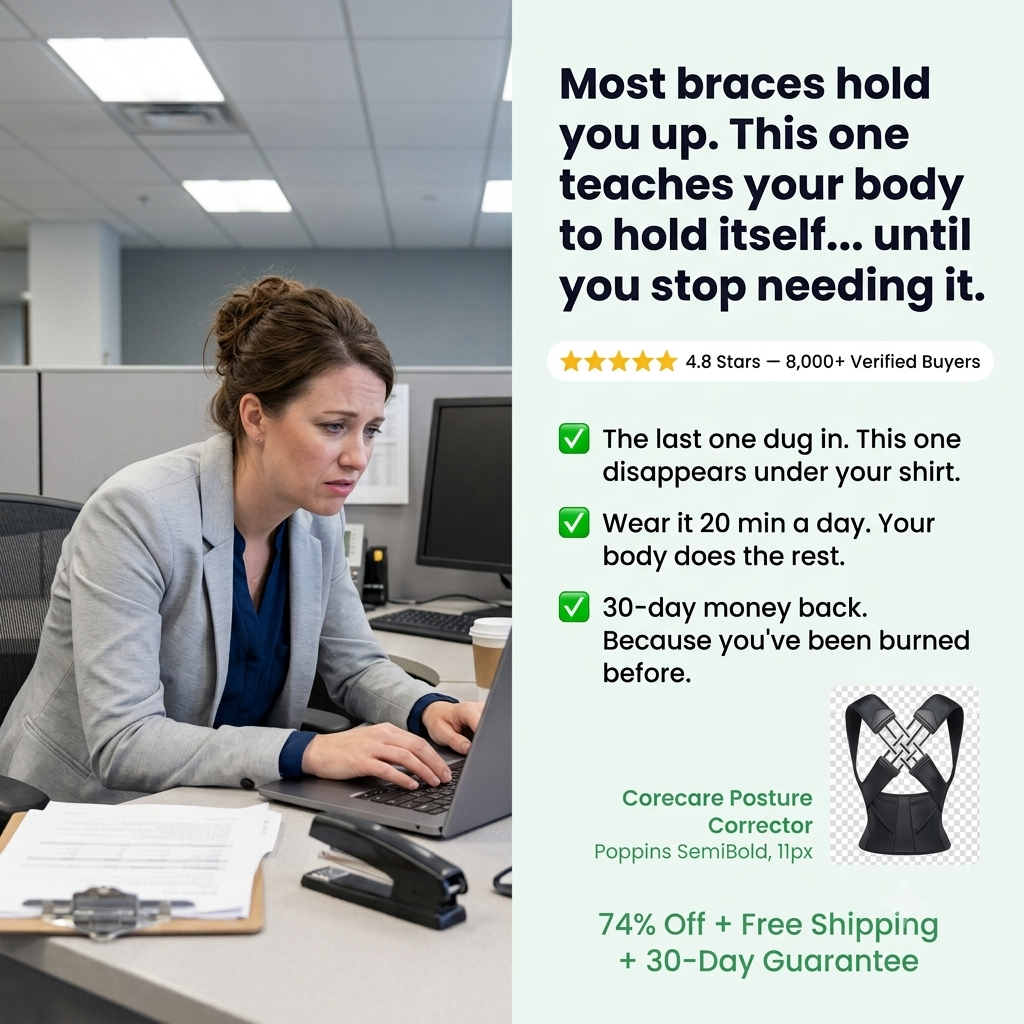 Static ad — branded
View ad copy
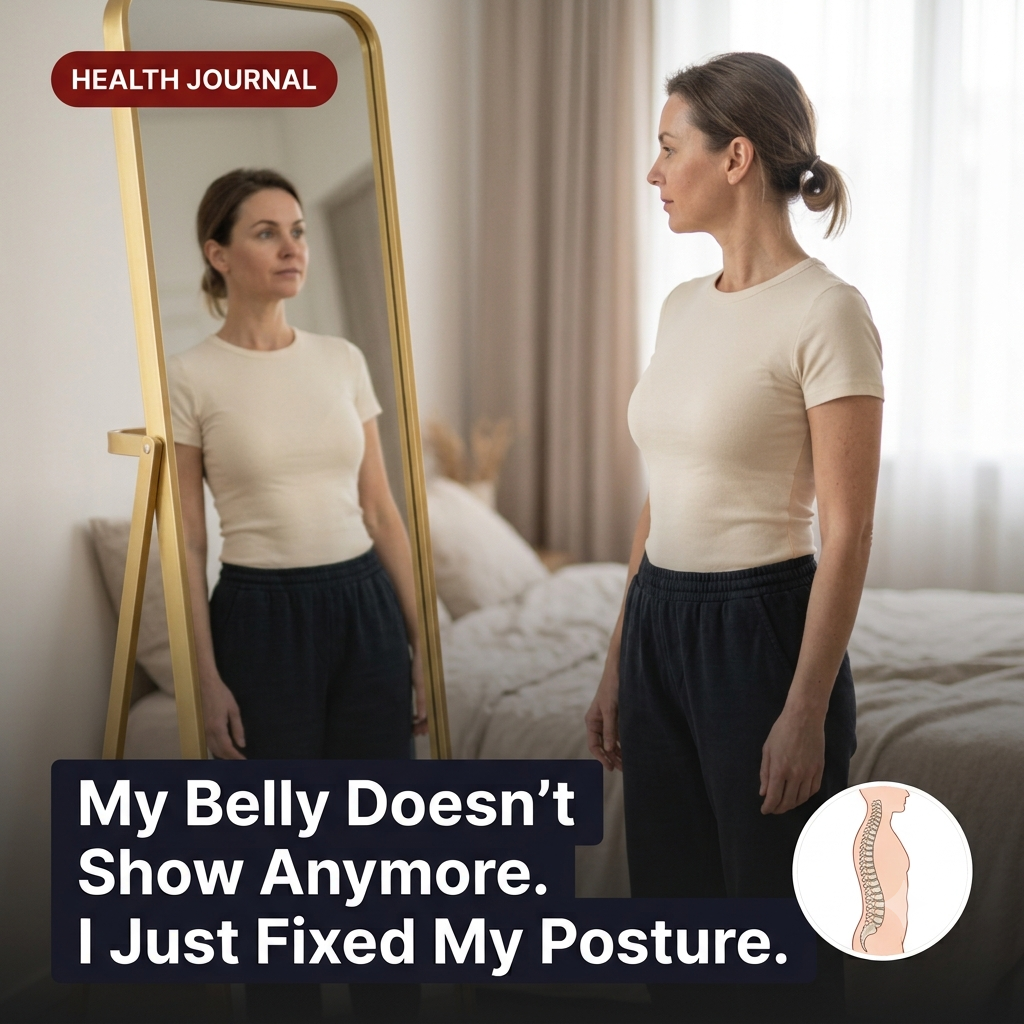 Static ad — editorial angle
View ad copy
The strategy behind it
The research made one thing clear before any copy got written: this market is Solution Aware leaning Product Aware, sitting in Stage 3 Mechanism Era sophistication. Ten different claims (instant correction, doctor recommended, builds muscle memory, results in 2 weeks) have been said so many times across the category that leading with any of them invites skepticism instead of interest. A vocal subgroup of PTs and wellness bloggers is actively calling posture braces quackery, and the buyer has likely seen some of that coverage. Ignoring it costs credibility. The only way through was to acknowledge the failure head-on and be specific about why this one is different.
The angle I built the entire funnel around was the drawer brace. Almost every negative review in the category followed the same arc: bought a brace, wore it twice, it dug into an armpit or got too hot, into the drawer it went. That is not a persuasion problem you solve by explaining posture mechanics again. It is a trust problem you solve by naming the exact failure point before the buyer has a chance to project it onto you. Leading with "I already bought one of these and it didn't work either" does more to lower defenses than any claim about the product itself.
The second decision was to lead with appearance over pain. Every competitor in this category runs pain relief as the primary hook. The reviews told a different story. Customers kept describing looking slimmer, looking taller, their belly not showing anymore, none of which had anything to do with weight loss. That gap between what competitors were advertising and what customers actually cared about became the secondary angle, and it ran almost untouched by anyone else in the space.
The mechanism story needed to do double duty: explain why this brace works differently, and pre-empt the "this just weakens your muscles" objection that PT-side skeptics keep raising. Instead of avoiding that criticism, the copy names it directly. Most braces hold your posture for you and the second you take them off you are back where you started. This one creates resistance the moment you start to slouch, so your body relearns the position instead of depending on the brace to hold it. That distinction is what separates a training tool from a crutch, and it is the difference between believable and defensive.
The VSL scripts and long-form ad copy both used a first-person UGC voice built around real review language: "gremlin shrimp posture," a wedding photo panic, a coworker asking why she was suddenly sitting up straight. That specificity is what makes the story read as lived experience instead of a script, especially for a buyer who has been burned by generic before/after claims before. The advertorial lander extended that same structure into a full mechanism breakdown, comfort and discreetness proof, and a comment section built entirely from authentic review phrasing, so the page reads like a piece of content the buyer found rather than an ad she is being sold on.
Brand brief — Corecare
About the brand
Corecare sells the Instant Posture Corrector, a wearable brace built around a crisscross strap design meant to solve the two things that make people abandon this category of product: digging into the armpit and being visible under clothes. The posture correction market is mature, not emerging. It has existed at mass retail for over a decade, which means almost every buyer in this funnel has already owned one of these before.
Target market
Their customer is not discovering the idea of a posture brace. She is comparing this one against a brace that failed her, sitting in a drawer somewhere in her house right now. She is not looking for an explanation of what a posture corrector is — she is looking for a reason to believe this specific one will not end up in the same drawer as the last one.
Product
Corecare Instant Posture Corrector, an adjustable crisscross brace using breathable mesh and a low-profile design meant to sit flat and stay invisible under regular clothing. Priced at $55.75, marked down from $97.50.
Avatar
Women 28–52 in desk jobs or WFH setups who have already tried at least one posture brace and stopped wearing it within the first week, usually from armpit chafing or visibility under clothes. They don't think of themselves as having a back problem — they think of themselves as someone who hasn't yet broken a bad habit. Appearance, not pain, is their primary emotional driver, ahead of the pain relief every competitor leads with.
Funnel stage
Cold traffic, Meta in-feed.
Assets produced
2 long-form Facebook ad copy variations, 2 full VSL scripts with 3 hook options each, static image ad concepts, fully-designed advertorial landing page (standalone HTML and Replo versions).