Case Study — Bonafide

Noctera & Revaree Plus

Two women's health products, one brand, two very different jobs: put a menopausal woman to sleep at night, and get her back into her body during the day. Both needed an angle that felt like a diagnosis, not a pitch.

Spec project — created as a portfolio case study, not live client work.

Noctera

Menopause sleep support supplement

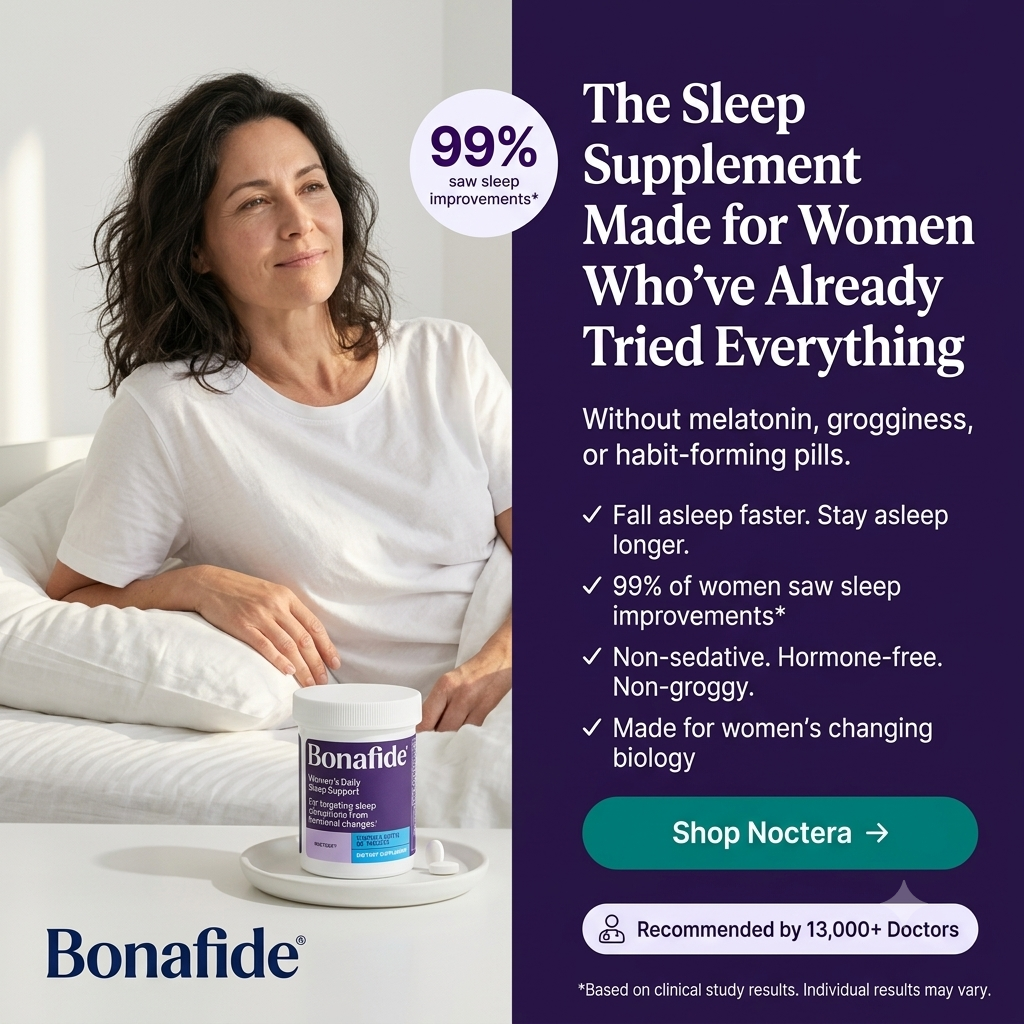
Noctera editorial-style static ad Static ad — editorial angle
Noctera branded static ad Static ad — branded
View the full advertorial lander →
View VSL ad copy
Melatonin. Magnesium. Ambien. Still up at 3am, still drenched in sweat. My doctor said it was normal. It wasn't normal. It was a GABA problem... and nothing I'd tried was touching it. Once I understood that, everything changed. Watch to find out what actually worked. 👇
View full VSL script
HOOK 1: Melatonin on the nightstand. Magnesium on the shelf. Sleepy tea on the counter. I didn't recognize myself anymore... until I found this. HOOK 2: Melatonin. Magnesium. Ambien. Still waking up drenched in sweat. My doctor said it was normal. Then I found out what was actually happening. HOOK 3: Melatonin made me groggy. Ambien left me foggy. Still up at 3am. I was grieving the person I was before menopause took my sleep... until I learned this. {LEAD} Three years of broken sleep and I'd become someone I didn't like very much. Snapping at my husband over nothing. Short with my kids for no reason. Then lying awake at 3am feeling guilty about it. I'd tried everything. Melatonin. Magnesium. A prescription from my doctor who told me this was normal. None of it worked. And there's a reason for that. When estrogen drops, it disrupts the signals in your brain that keep you calm and asleep through the night. Melatonin doesn't touch that. Magnesium doesn't touch that. Nothing on the drugstore shelf does. Once I understood that... I finally knew what I was actually looking for. {BODY} Here's what nobody explained to me. Estrogen regulates a neurotransmitter called GABA. The signal that keeps your brain quiet while you sleep. When estrogen drops, GABA activity drops with it... And your brain loses its ability to quiet itself down at night. That's why you go to bed exhausted and wake up at 3am with your mind running through everything. I call it the GABA gap. And here's the thing about the GABA gap... Melatonin works on your circadian rhythm. A completely different pathway. It was never going to fix this. When I found a supplement specifically formulated to address this. I was skeptical. I'd spent hundreds of dollars on things that promised results. But this one had something I hadn't seen before. A double-blind, placebo-controlled clinical trial. 127 women. All experiencing the same broken sleep I was. 88% of them moved from moderate-to-severe sleep disruption into the normal range. In three weeks. One of them said she woke up refreshed and was able to focus on the upcoming day. I remember reading that and thinking: "I can't remember the last time I said that about a morning." I'm not going to tell you this fixed everything overnight. It didn't. But within two weeks I was sleeping in longer stretches. The 3am wake-up started fading. And slowly, the person I recognised started coming back. The one who had patience. Who showed up. Who didn't spend every day apologising for who she'd been the night before. The product is called Noctera. It's made by Bonafide, a women's health company recommended by over 13,000 doctors and trusted by more than 1.3 million women. Noctera is the only sleep supplement specifically formulated to address the GABA gap that menopause creates. Melatonin-free. Hormone-free. And backed by a double-blind clinical trial showing 88% of women with serious sleep disruption moved into the normal range in three weeks. If you've tried everything and nothing has worked... It's probably because nothing you've tried addressed the real problem. Noctera does. Tap below to learn more.
View additional ad copy variation
Is everyone seeing me yawn through this entire meeting? I smiled. Nodded. Pretended I'd slept. I hadn't. Not really. 2:47am. Wide awake. Heart going a little too fast. Brain suddenly wired on. The email I forgot, the thing my son said, did I pay that bill? This had been happening for over a year. And it's not like I wasn't trying. Melatonin → woke up groggy AND still woke up at 3am. Magnesium → helped me fall asleep, did nothing for staying asleep. Tart cherry, valerian, the "sleepy girl mocktail" → nothing. Ambien, for two weeks → woke up at 3am anyway, just foggier about it. I brought it up to my doctor. "That's pretty normal for your age. Try napping more." That was the whole answer. So I did what every woman in this stage of life eventually does. I went looking myself. Here's what I found out, and it made me a little angry: This was never an insomnia problem. It's a GABA problem. When estrogen drops, it throws off the GABA and glutamate signals that are supposed to keep your brain calm at night. Your body is exhausted, but your brain is still running on "alert." That's why melatonin never fully worked. Melatonin helps you fall asleep. It does nothing for why you can't stay there. I'd been treating the wrong symptom for over a year. A sleep specialist I found through a menopause group mentioned a formula that was actually built around this. Not melatonin, not another magnesium blend. Hormone-free, but designed specifically for the GABA/estrogen connection. It's called Noctera, by Bonafide. The thing that got me to actually try it: a real clinical trial. 127 women, double-blind, placebo-controlled. 88% moved from moderate-to-severe sleep disruption into normal range... In 3 weeks. Not "clinically inspired." An actual study. Week 1: Nothing dramatic. Kept taking it anyway. Week 2: Woke up at 3am once instead of three times. Fell back asleep in twenty minutes instead of two hours. Week 3: A full night. All the way through. I lay there at 6am almost suspicious of it. Week 6: My husband said it before I did: "you seem less... wired." My head felt clear for the first time in over a year. Not sedated-clear. Actually clear. If you're waking up at 2 or 3am with a brain that won't shut off... If melatonin gave you grogginess but not actual sleep... If you've been told this is "just your age"... You're not broken. Your GABA signals are just out of balance... And that's fixable. 👉 Shop Noctera — Hormone-Free, Melatonin-Free Sleep Support ✓ 99% of women in clinical trials saw sleep improvements ✓ Non-sedative. No grogginess. No dependency. ✓ Recommended by 13,000+ doctors ✓ HSA/FSA eligible 📜 Based on a double-blind, placebo-controlled clinical trial Bonafide Individual results may vary.

The strategy behind it

The research on this market made one thing immediately clear: the real pain is not falling asleep. It is waking up at 3am with a brain that will not stop, lying there for two hours, and doing it again the next night. Every competitor in this category leads with "helps you fall asleep." That framing misses where the actual suffering lives.

The angle I built this funnel around was the GABA gap. When estrogen drops during menopause, it disrupts the GABA and glutamate signals that keep the brain quiet at night. Melatonin works on circadian rhythm, a completely different pathway. That is why melatonin never fully solved it. This is a mechanism-first market, and that mechanism is the most specific and underexplained story in the entire category.

Leading with "this is not a melatonin problem" works on two levels. It immediately validates the avatar's experience of failing with melatonin, and it opens the door to a genuinely fresh mechanism she has not heard before. That combination is the fastest path through skepticism for a buyer who has been burned multiple times.

The UGC format was the right vehicle here because this avatar trusts other women who have been through the same experience more than she trusts brand messaging. The VSL was written to sound like a woman sharing something she wishes she had found sooner, not a brand selling a product. The ad copy extended that same voice across two angles: a short punchy version leading with the failed solutions stack, and a long-form "pharmacy nightstand" testimonial that walks through the full emotional arc of a year of broken sleep and what finally changed it.

The clinical trial data was embedded into both the VSL and the ad copy as proof, not decoration. 127 women, double-blind, placebo-controlled, 88% into normal range in 3 weeks. That level of specificity is what separates Noctera from every other supplement in this space and it needed to be treated as the conversion anchor, not a footnote.

Revaree Plus

Vaginal health & comfort supplement

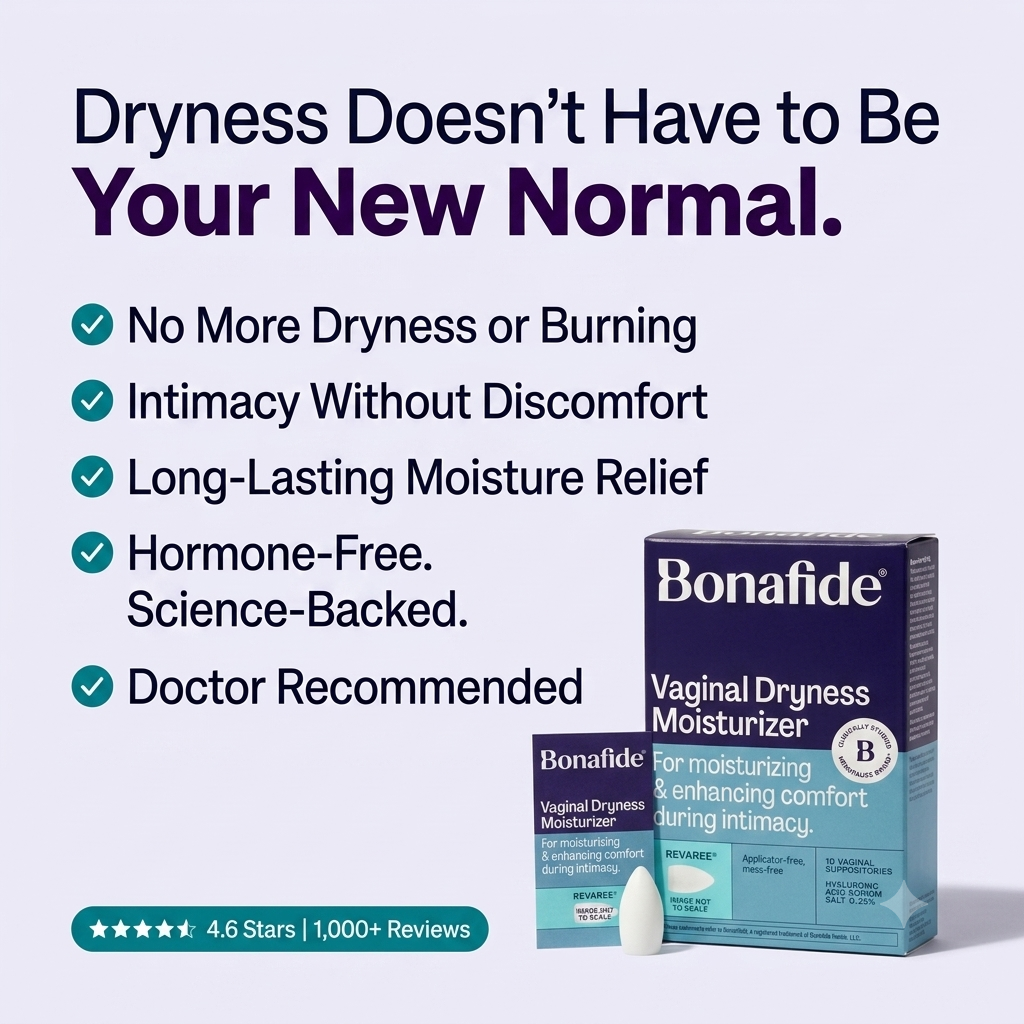
Revaree Plus editorial-style static ad Static ad — editorial angle
Revaree Plus branded static ad Static ad — branded
View the full advertorial lander →
View VSL ad copy
If you've tried lubricants and they only helped for a moment... this is why. According to gynecologists, most women dealing with vaginal dryness in menopause are solving the wrong problem. Lubricants address the surface symptom. They don't touch the root cause. Which is this: When estrogen drops, vaginal tissue loses its ability to hold moisture from the inside. It thins. It becomes fragile. No amount of surface lubrication changes that. Which is exactly why it keeps coming back. The ingredient that actually works? Hyaluronic acid. The same one that restores moisture at a cellular level in skincare, doing the same thing in vaginal tissue. It's hormone-free. It works alongside HRT or without it. And there's clinical trial data behind it. Revaree Plus by Bonafide is trusted by 1.3M women and recommended by 13,000+ doctors. A gynecologist breaks down the 5 changes women actually notice, and why they happen: Find out what they are »
View full VSL script
HOOK 1: It starts as dryness. Then sitting becomes uncomfortable. Then sex becomes painful. Then you stop wanting it at all... and wonder if that version of you is just gone. It's not. A gynecologist explains why. HOOK 2: First the dryness. Then discomfort that never fully goes away. Then a quiet distance between you and your partner that neither of you mentions. A gynecologist explains what's driving it... and what fixes it. HOOK 3: First the dryness. Then bracing yourself before intimacy instead of looking forward to it. Then stopping bringing it up with your partner altogether. A gynecologist explains what's behind this... and why it's reversible. {LEAD} I've been a gynecologist for over 20 years. And vaginal dryness is the symptom my menopausal patients are least likely to bring up... And the one I wish they'd told me about sooner. Because most of them have been quietly dealing with something that progresses. It starts as dryness. Then discomfort. Then painful sex. Then they stop wanting intimacy altogether... And start thinking that part of their life is just over. It's not. What's actually happening is this: when estrogen drops, it doesn't just reduce lubrication. It changes the structure of the tissue itself. The cells thin. Moisture stops being retained. A lubricant sits on the surface. It doesn't reach any of that. That's why nothing they tried worked. And that's what I want to talk about today. {BODY} The medical term is Genitourinary Syndrome of Menopause. But what it actually means is this: Your vaginal tissue has lost its ability to hold moisture from the inside. Estrogen used to maintain the thickness, elasticity, and hydration of that tissue. When it drops, that maintenance stops. The tissue becomes thinner. Drier. More fragile. Lubrication is just a symptom, not the root cause. And the only thing that addresses it at that level is something that can actually penetrate the tissue and restore moisture from within. That ingredient is hyaluronic acid. Most women know it from skincare. What they don't know is that it works the same way in vaginal tissue... Binding moisture at the cellular level, not sitting on top of it. That's the difference between temporary relief and actually fixing it. I've seen this work in patients who told me they'd tried everything. Women who'd given up on this part of their life entirely. What changed for them wasn't a prescription. It wasn't hormones. It was finally going after the root cause instead of the symptom. There's clinical trial data behind this. It's hormone-free. And it works whether or not you're on HRT. The product is called Revaree Plus. It's made by Bonafide. A women's health company trusted by over 1.3 million women and recommended by more than 13,000 doctors. It's a vaginal insert with hyaluronic acid as the active ingredient. You use it every few days. It restores moisture at the tissue level... Not temporarily, but cumulatively over time. Most women start noticing a difference within a few weeks. {CTA} If you've been quietly living with this. If intimacy has become something you dread. If you've stopped bringing it up with your partner. If you've started to feel like a stranger in your own body. I want you to know that's not who you are now. Click the link below to learn more about Revaree Plus.
View static ad copy — branded
If you think dryness is the worst part of menopause, wait until you find out what it's doing to your marriage. After 3 years of "just use more lube," my husband stopped initiating. He could feel me wincing, and he'd rather stop than make me push through it. I'm 51. If you've started flinching when your partner reaches for you, here's what you need to know. I did all the right things. Every lubricant with 4+ stars. A $90 "all day comfort" moisturizer that helped for an hour, then wore off. None of it touched what was actually happening to the tissue. Intimacy went from twice a month to once. Each time bracing instead of looking forward to it. Doctor 1, my regular gynecologist, glanced at my chart. "That's pretty normal for your age. Have you tried a water-based lube?" "I've tried six." Doctor 2, a menopause specialist, was kinder, but landed in the same place. "There are moisturizers, but most women find they only help a little. We could also do topical estrogen." "Is there anything that isn't hormonal?" She didn't have a confident answer. Doctor 3, a pelvic floor specialist, finally said the word out loud: atrophy. "Lubricant only helps in the moment. It doesn't rebuild what the tissue is missing." She handed me a brochure and told me to keep using lubricant in the meantime. A coworker noticed I'd started skipping girls' trips with a lot of walking. I told her why. She sent one text: "Have you tried Revaree?" Her OB had recommended it after she asked the exact question I'd been Googling for a year. Revaree Plus uses a hyaluronic acid molecule engineered smaller than regular HA, so it actually penetrates the tissue instead of sitting on the surface like a cream. No hormones. No applicator. Just an insert. You use it every 2–3 days, not before every encounter. 4.6 stars, 1,000+ reviews. One woman wrote that it worked in a month after pelvic floor therapy and estrogen cream had left her with nothing for two years. Day 9, the point where the product claims you start noticing change. I did. Week 3, we were intimate. Halfway through I realized I'd forgotten to brace for pain. Week 4, he reached for me first. First time in months. 3 doctors. None of them mentioned a non-hormonal option that actually rebuilds the tissue instead of lubricating around the problem. This isn't permanent, and it isn't about your age. Your tissue lost moisture it used to hold onto on its own. Revaree Plus helps it hold that moisture again, without hormones. 👉 Try Revaree Plus: Doctor Recommended, Hormone-Free Relief 💕 Hormone-Free. Science-Backed. 🌿 No More Dryness or Burning ⭐ 4.6 Stars, 1,000+ Reviews P.S. We had sex three times this month without me reaching for lubricant once. I'd forgotten what it felt like to want to be touched instead of dreading it. 👉 Try Revaree Plus: Doctor Recommended, Hormone-Free Relief
View static ad copy — editorial
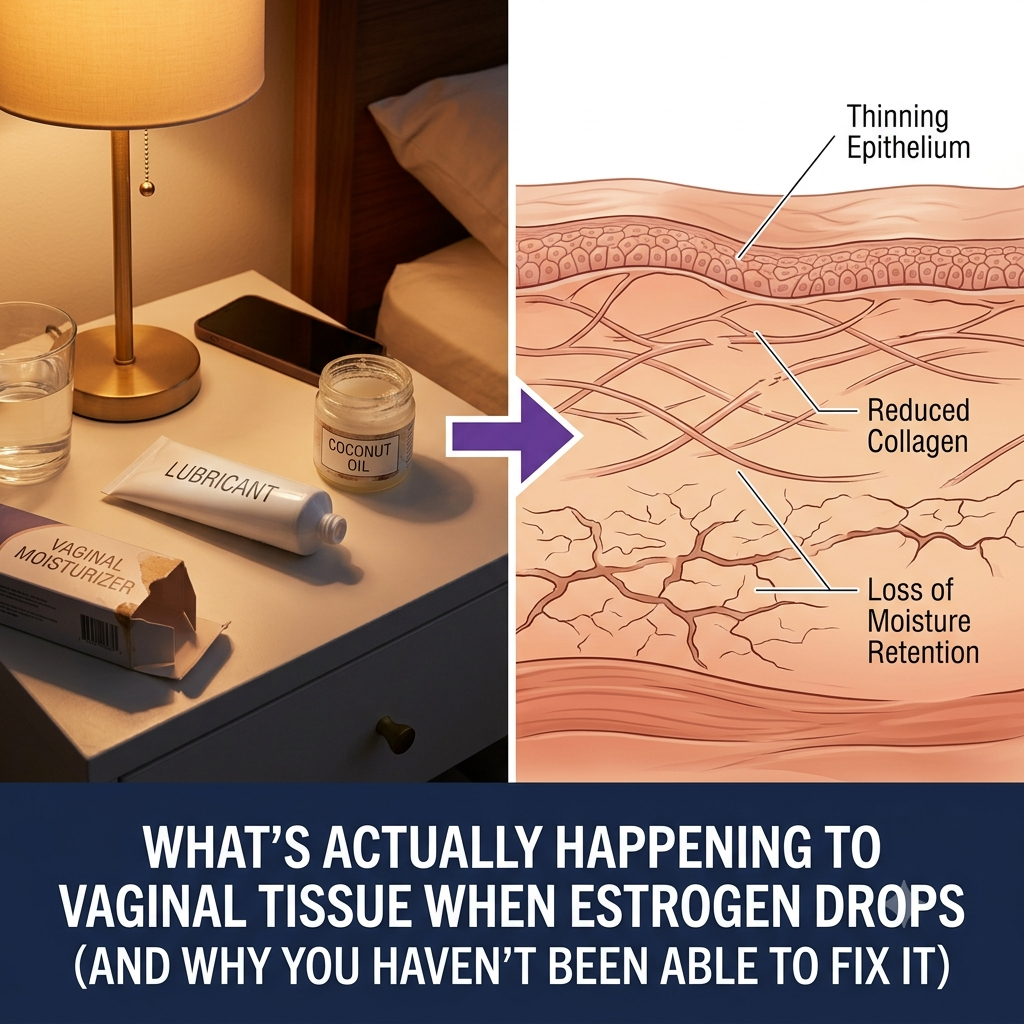
My nightstand looked like a pharmacy. This diagram? Finally explained why none of it was working. If you're in perimenopause or menopause and dealing with dryness "down there," you know this drill. You buy the lubricant. You buy the moisturizer. Someone on a forum swears by coconut oil, so you try that too... And for a night, maybe it helps a little. Then you're right back where you started. I spent almost two years cycling through every over-the-counter fix I could find. Sex went from something I enjoyed to something I started quietly dreading. The burning, the rawness, the way intimacy with my husband turned into an apology instead of a connection. I didn't say much about it... I just kept buying tubes. Everyone in the menopause groups says the same things: "Lube helps, you just have to find the right one" (it doesn't, not really). "This is just part of getting older" (technically true, not actually helpful). "Try coconut oil, it's natural" (so is sandpaper). Here's what nobody explained to me: Dryness isn't the actual problem. It's a symptom. When estrogen drops, your vaginal tissue physically changes — the epithelium thins, collagen production slows, and the tissue loses its ability to hold onto moisture on its own. Lubricant sits on top of that problem... It doesn't touch it. That's when I found Revaree Plus. No hormones. No prescription. Just hyaluronic acid. The same ingredient used to hold moisture in skin... Formulated as a vaginal insert that actually gets absorbed into the tissue instead of just coating it. I was skeptical. I'd been skeptical of everything by that point... But I was also tired of apologizing. The timeline: Days 1–7: noticeably less rawness during the day. Week 2: dryness during intimacy was almost gone. Week 4: this stopped being something I had to think about, plan around, or brace for. Is it instant? No, they're upfront that it takes about a week to feel the difference, and that's exactly what happened for me. But it's the first thing that's worked on the actual tissue and not just the symptom. My routine: insert before bed, every 2–3 nights, lie down for about 30 minutes so it actually absorbs. That's it. No daily routine, no remembering to reapply mid-day. To every woman who has a drawer full of things that "sort of" help... The dryness isn't a personality trait you've developed with age. It's a tissue-level change, and it has an actual answer. I'm not going to pretend intimacy is suddenly effortless again overnight. But I stopped dreading it. I stopped apologizing. P.S. — I spent two years treating the surface. The week I started treating the actual tissue was the week things finally changed.

The strategy behind it

Revaree Plus presented a creative challenge that went beyond positioning. Vaginal dryness is the symptom menopausal women are least likely to seek help for, because most have been told it is normal, nothing serious, just use more lubricant. That combination of dismissal and embarrassment means the ad has to do two things at once: make the woman feel seen before it makes any claim about the product.

The angle I built this funnel around was the surface vs. tissue distinction. Lubricants treat the surface. Revaree Plus works at the tissue level. That reframe is the mechanism story, and it is the only explanation that makes sense of why everything she has tried only helped temporarily. When estrogen drops, vaginal tissue physically changes. It thins, loses collagen, and stops holding moisture on its own. No amount of surface lubrication changes that. Hyaluronic acid, delivered directly into the tissue, does.

The Gynecologist VSL was the only viable format for the opening. A physician framing removes the embarrassment barrier from the conversation by making it clinical rather than personal. It also gives the mechanism story the credibility it needs to land, especially for a woman who has already been dismissed by her own doctor. The hook was built around a progression most women in this avatar will recognize: dryness to discomfort to pain during intimacy to quietly withdrawing from it altogether.

That arc mirrors what actually happens, and naming it out loud is what stops the scroll. The long-form ad copy took a different approach. Written in a first-person UGC voice, it followed a woman through three doctors, two years of lubricants, and a marriage quietly absorbing the impact of a problem nobody had a real answer for. That format works because it mirrors the exact journey this avatar has been on, with enough specificity in the detail (the wince her husband noticed, the girls' trips she started skipping) to feel like a real account rather than a brand story.

The listicle lander was built to bridge the emotional hook of the ads into the clinical proof and practical specifics the buyer needs before committing. Timeline, mechanism, usage routine, and social proof were structured to answer the questions this skeptical buyer brings to every supplement she considers.

Brand brief — Bonafide

About the brand

Bonafide is a women's health supplement company built around one premise: women deserve science-backed solutions for what their bodies actually go through, not generic wellness products with the packaging swapped out. The product line targets perimenopause and menopause specifically, with formulations developed alongside OB/GYNs and backed by clinical trial data. It sits in a precise middle ground between pharmaceutical credibility and supplement accessibility — hormone-free, clinically studied, and trusted by more than 1.3 million women and recommended by more than 13,000 doctors.

Target market

Their customer has been dismissed by at least one doctor. She has spent money on things that didn't work. She is educated, skeptical, and done accepting that feeling terrible is just part of getting older. She needs a reason to believe before she buys, and she responds to specificity over promises.

Noctera

Product: Noctera, a melatonin-free, hormone-free sleep supplement formulated specifically for menopausal sleep disruption. Backed by a double-blind, placebo-controlled clinical trial of 127 women showing 88% moved from moderate-to-severe sleep disruption into normal range within 3 weeks.

Avatar: Women 45–58 in perimenopause or menopause who wake up at 2 or 3am and cannot fall back asleep. They have already tried melatonin, magnesium, herbal blends, and possibly prescription sleep aids. Nothing has worked. They are not looking for another sleep supplement. They are looking for a reason to believe this one is different.

Funnel stage: Cold traffic, Meta in-feed.

Assets produced: UGC VSL script, 2 Facebook ad copy variations, fully designed lander, static image ads.

Revaree Plus

Product: Revaree Plus, a hormone-free vaginal insert using hyaluronic acid to restore moisture at the tissue level. Clinically studied, recommended by 13,000+ doctors, 4.6 stars across 1,000+ reviews.

Avatar: Women 45–60 in perimenopause or menopause experiencing vaginal dryness, discomfort during intimacy, and a quiet withdrawal from physical connection with their partner. They have cycled through lubricants and moisturizers. Nothing has provided lasting relief. Many have seen multiple doctors and received answers that felt dismissive or incomplete. They have stopped bringing it up.

Funnel stage: Cold traffic, Meta in-feed.

Assets produced: Gynecologist VSL script, 2 Facebook ad copy variations, fully-designed listicle lander, static image ads.